

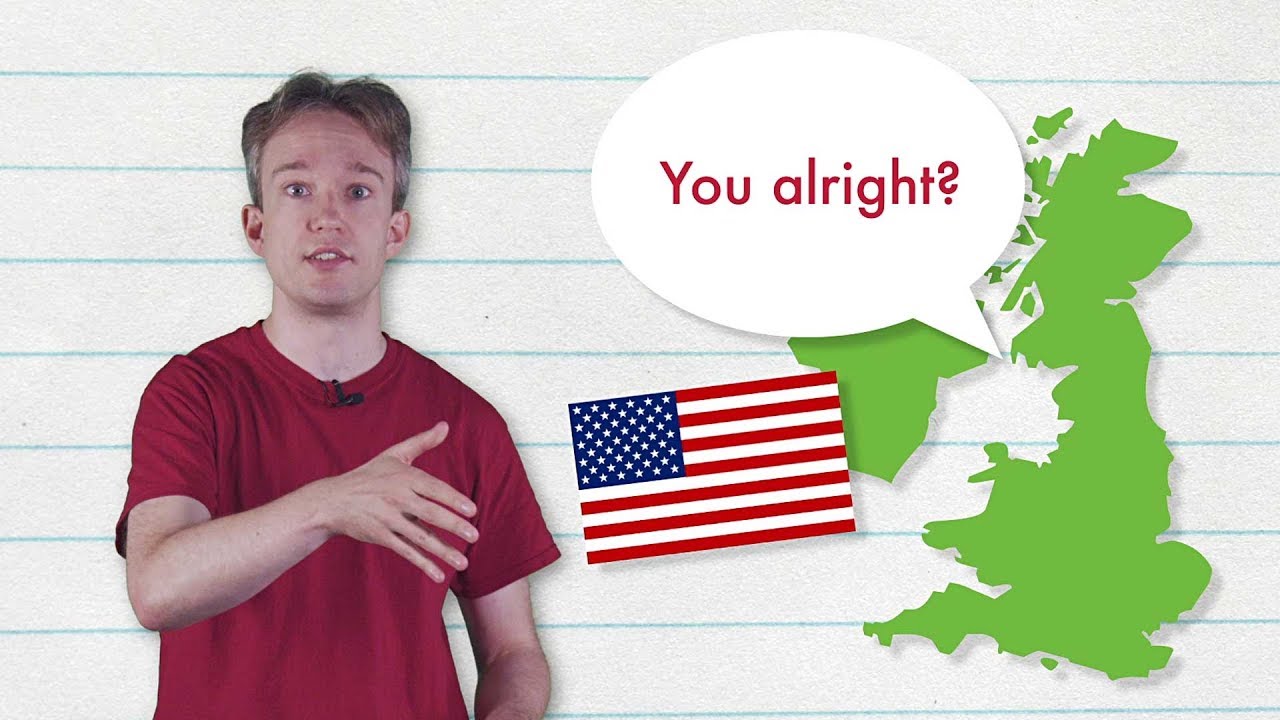
 "Hello!" "Thank you!" "You're welcome!" These are all phatic expressions, and people can argue about them. Pull down the description for the references! MORE LANGUAGE FILES:
 Written with Gretchen McCulloch and Molly Ruhl. Gretchen's new book, BECAUSE INTERNET, is available now:
🇺🇸 US:
🇨🇦 CA:
🇬🇧 UK:
(Those are affiliate links that give a commission to me or Gretchen, depending on country!)
Gretchen can be found at
REFERENCES:
Brown, P. and Levinson, S. 1987. Politeness: Some Universals in Language Usage. Cambridge. Cambridge University Press.
Goffman, Erving (1967): On Face-Work. An Analysis of Ritual Elements in Social Interaction. In: Ders.: Interaction Ritual. New York: Doubleday. 5-45.
Dinkin, A. (2018). It's no problem to be polite: Apparent-time change in responses to thanks. Journal of Sociolinguistics, 22(2), 190-215.
Bucholtz, M. & Hall, K. (2005) Identity and interaction: A sociocultural linguistic approach. Discourse Studies. vol. 7 (4-2): 585-614.
Yngve, Victor. "On getting a word in edgewise," page 568. Papers from the Sixth Regional Meeting [of the] Chicago Linguistic Society, 1970.
Sacks, H., Schegloff, E. A., & Jefferson, G. (1974). "A simplest systematics for the organization of turn-taking for conversation." Language, 50, 696–735.
Tannen, D. (2012). Turn-Taking and Intercultural Discourse and Communication. In Bratt Paulston, C., Kiesling, S. F., & Rangel E. S., Japan/Anglo-American Cross-Cultural Communication (pp 135-157). Blackwell Handbooks in Linguistics: The Handbook of Intercultural Discourse and Communication.
I'm at
on Twitter at
on Facebook at
and on Instagram as tomscottgo


0 Comments